Leadership Shelby County logo

Since 1988, Leadership Shelby County has brought together hundreds of adult leaders. These graduates of Leadership Shelby County go on to use their expertise and experience in local companies, become active members of our civic and charitable organizations, and lead our local government agencies to enhance our community at all levels. With over 700 alumni, this program has had a significant community impact.

About Leadership Shelby County

Since 1988, Leadership Shelby County has brought together hundreds of adult leaders. These graduates of Leadership Shelby County go on to use their expertise and experience in local companies, become active members of our civic and charitable organizations, and lead our local government agencies to enhance our community at all levels. With over 400 alumni, this program has had a significant community impact.

A stand alone organization for many years, Leadership Shelby County is now under the umbrella of Shelby County Chamber of Commerce. 

For more information on applying for the program or sponsorship opportunities, call the Shelby County Chamber of Commerce at (317) 398-6647 or visit www.shelbychamber.net.

Class of 2020-2021

Ashley Larochelle

Ashley was a part of the Leadership Shelby County Animal Shelter Clean-up Day 2021.

Every person that showed up was a star performer. So many volunteers completed their assigned task and then came back looking for more to do. “What can I do next?” I heard that so many times from multiple people who wanted to all they could to ensure our project was a success and more importantly show love and support for the animals and shelter team. The volunteers ranged from young to seasoned, but it didn’t change the fact they all completed every task given and did it well.

The shelter team setup  a staging area and supplied snacks and drinks.

Class of 2024-2025

Thomas Miller

Thomas is an active member of Buddies Helping Buddies, a Leadership Shelby County initiative, went on to become a registered 501C (3) non-profit organization. The group has a focus on standing by those we love who are battling mental health challenges—like suicide prevention, addiction and recovery, and homelessness. The group has hosted various events, a couple including Strikes for a Cause and Buddies on the Green Golf Classic to help raise funds for their cause.

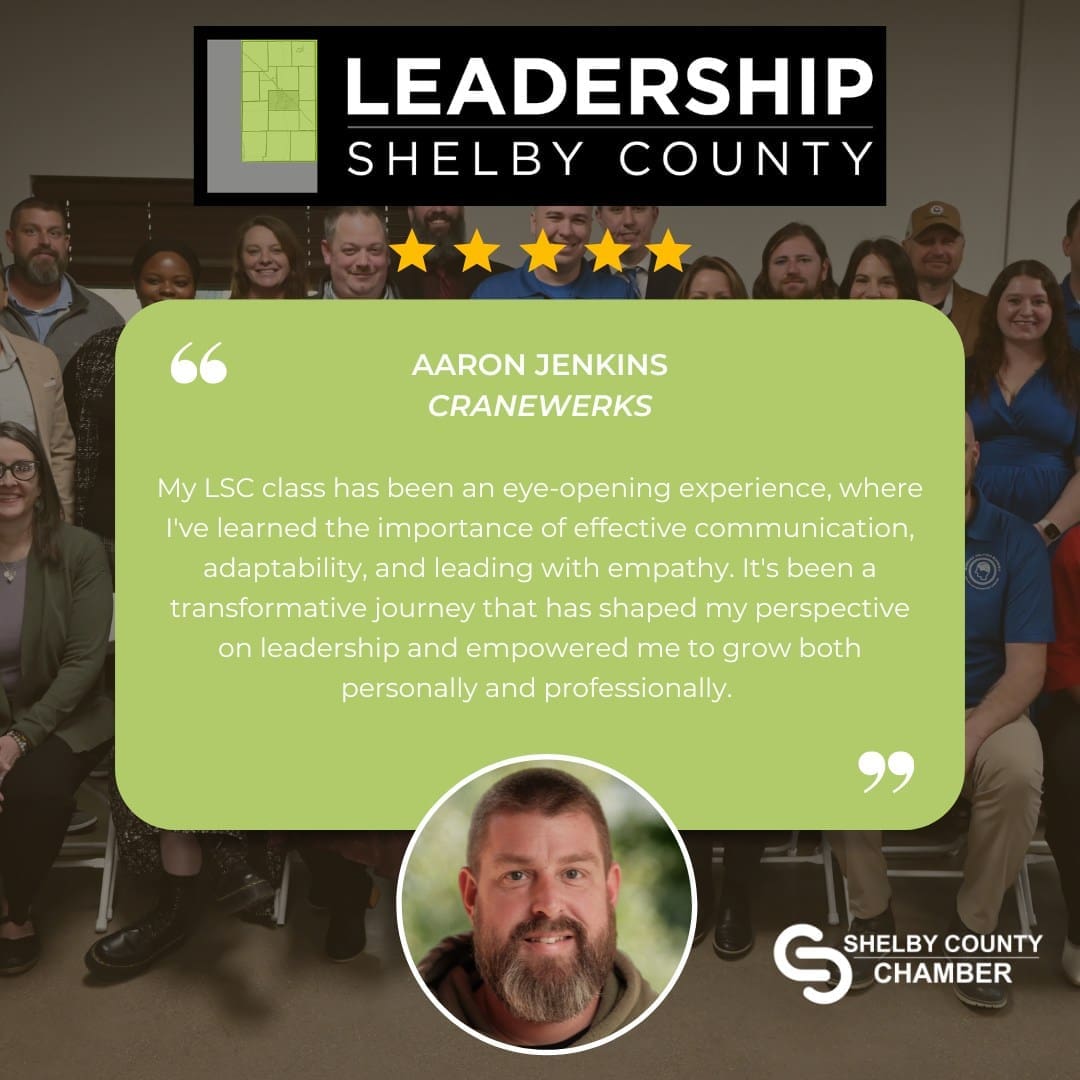
Aaron Jenkins

Aaron’s group, Ramp It Up Veterans, sold raffle tickets and offered sponsorship opportunities to help assist local charitable organizations who offer aid to veterans in our Shelby County, IN community.

“As a group, we realized that every single one of us has been touched by a family member or friend who has served in the military. We’ve also witnessed the challenges faced by veterans, especially those who have served during wartime. This project is our way of honoring their sacrifices and creating a long-term way to support our nonprofits who help veterans,” said Gena Linville, one of the team members.

In Fall 2024, Shelby County school students wrote heartfelt cards and letters to local veterans, and continued through community volunteerism with the construction of a safe entrance ramp at a local veteran’s home.

The team continued this vital mission by establishing a Veteran Endowment Fund through the Blue River Community Foundation. This permanent Field of Interest Fund will provide an additional funding stream to nonprofit organizations who aid veterans in Shelby County, IN. The fund accepts donations year-round to sustain this essential cause.

Class of 2025-2026

Jordan Smith

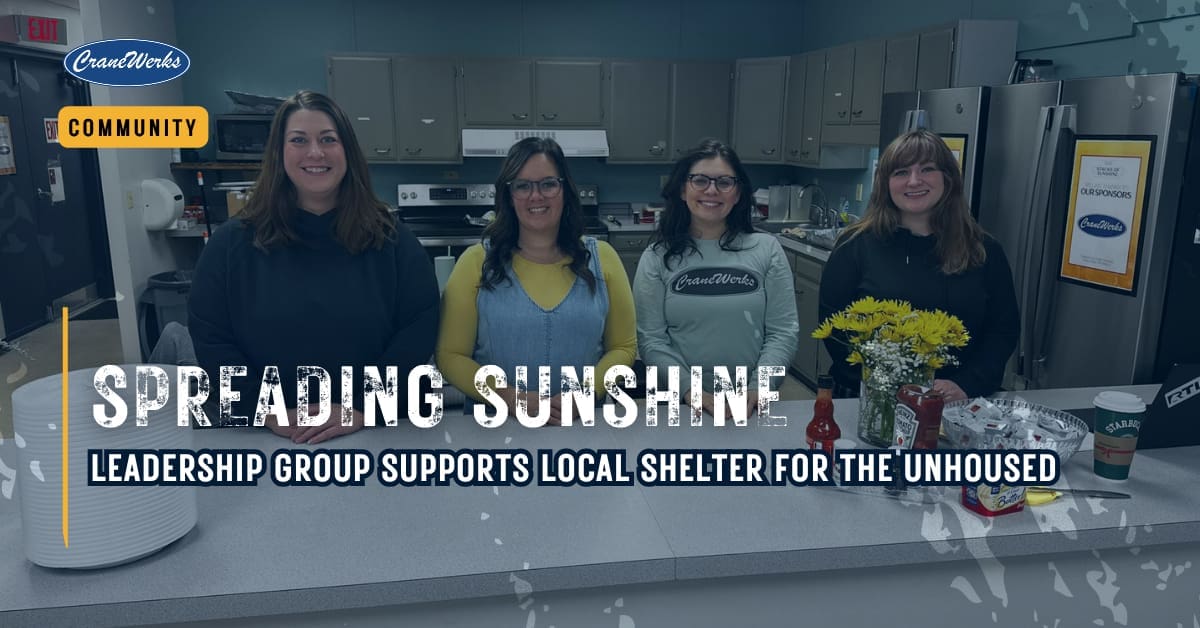
Jordan has been a part of Spreading Sunshine, a group who is hosted ‘Stacks of Sunshine,’ a pancake breakfast and silent auction at The Bridge to raise funds in support of the Sunshine House, a local nonprofit who recently opened an overnight shelter for unhoused people. The group raised over $5K for the cause.

Topics Discussed in Leadership Shelby County

Discover and Maximize Your Clifton Strengths!

Before coming to this workshop, participants will take the Clifton Strengths assessment online. This measures each participant’s unique talents (their natural patterns of thinking, feeling, and behaving) and categorizes them into 34 themes. During the workshop, a certified Coach will provide leaders with an overview of the 4 Domains (Executing, Influencing, Relationship Building and Strategic Thinking) while walking participants through their personalized results which will help them gain insight into their unique strengths and how to apply them in various aspects of their lives. Through personalized coaching and interactive activities like the Strengths Sorting Game, “Name It, Claim It”, and Strengths “Speed Dating”, leaders in this workshop will develop a deeper understanding of themselves and others, leading to increased confidence, resilience, and personal fulfillment.

Developing Emotional Intelligence (EQ)

Emotional Intelligence (EQ) is the single greatest predictor of workplace and relationship success. Unlike IQ, which is relatively stable throughout life, EQ can be developed and improved over time. Emotional Intelligence is not about suppressing emotions. It is about understanding how to respond to your emotions in a healthy way and how to recognize, understand, and influence the emotions of others. A leader’s ability to retain and engage their team is directly tied to their EQ. In this workshop, participants will explore examples of triggers that lead to thoughts, emotions, actions, and consequences. They will then spend time reflecting on people/situations that “push their buttons” and identifying coping strategies.

​Finally, participants will complete an Emotion Meter exercise designed to increase their abilityto recognize and label emotions, then act accordingly.

Leaders will also receive a high-level overview of the 5 Components of Emotional Intelligence and learn strategies for improving within each:
  • Self-Awareness: Your ability to perceive you own emotions in the moment and understanding our tendencies across situations.

  • Self-Regulation: Your ability to use awareness of emotions to actively choose what you say or do.

  • Motivation: Your ability to understand your own motivations and the motivations of others.

  • Empathy: Your ability to listen, observe, “read the room”, and seek to better understand perspectives.

  • Social Skill: Using self-awareness, self-regulation, motivation, and empathy to work productively with people over the long haul.

A Leader’s Guide to Onboarding, Engaging, and Retaining Your Employees

Follow the story of Alex and Liz, two entry-level employees with the same level of skill and motivation who start working at the same company on the same day. One will thrive in their role and be presented with an opportunity for growth, and one will leave the organization, blasting their negative experience on social media. The difference? They each work with a different Team Leader and report to a different Supervisor. As the story unfolds, participants learn what employee engagement is and 9 practical things they can do to support team members from day one including: 1) Creating a positive first impression, 2) Introducing team members to leadership, 3) Onboarding, 4) Introducing team members to their colleagues, 5) Providing ongoing training, 6) Showing employees that you care, 7) Effective and engaging communication, 8) Believing in the company mission, and 9) Providing Growth Opportunities. Participants are broken into small groups to discuss what they/their organization is doing well along with opportunities for improvement. A challenge to articulate at least one action each participant will stop doing, start doing, or do differently to impact 

Appreciating Differences: Understanding Generations at Work

Understanding the five generations in today’s workforce helps improve  communication, collaboration, and productivity. Each generation brings unique experiences, attitudes toward work ethic, and expectations into their organization. This workshop focuses on the learning the characteristics, impact, and challenges each generations brings to the workplace along with strategies for effective collaboration.

Challenges of a Multi-Generational Workforce
  • Communication Differences: Varied preferences for in-person, phone, or digital communication

  • Work Style Conflicts: Traditionalists and Baby Boomers may favor structured environments, while Millennials and Gen Z prefer flexibility.

  • Technology Gap: Different levels of comfort with digital tools and platforms.

  • Workplace Expectations: Generations have varying expectations for job security, benefits, and career progression.

Strategies for Effective Collaboration
  • Leverage Strengths: Assign tasks based on strengths, such as mentoring from Baby Boomers and tech skills from Gen Z.

  • Foster Open Communication: Encourage feedback, flexibility, and transparency across all generations.

  • Cross-Generational Mentoring: Pair older employees with younger ones for knowledge sharing and skill development.

  • Embrace Technology: Provide training for all employees to stay updated on digital tools and platforms.

Effective Workplace Communication: Understanding Communication Styles and Communicating Through Change

We’ve all experienced the impact of poor communication: loss of trust, frustration, misunderstanding, uncertainty, failure to perform…the list goes on! When teams fail to communicate effectively, it impacts productivity and the organization’s ability to grow and be successful. That’s why most of our leadership programs kick off with communication.

In this session, participants will define effective communication, discuss barriers that get in the way, and explore the 5 levels communication including the ultimate goal of communication which is to change behavior. Participants will learn strategies to become a better listener while engaging in an activity that illustrates the importance of asking open ended questions.

In this season, it is especially important that leaders also understand how to communicate in the face of uncertainty and change. Therefore, as part of this course, participants will explore a time they experienced a significant change in the workplace including what went well and what might have led to a different/better result.

Leaders will walk through the stages of change (Pre-Contemplation, Contemplation, Preparation, Action, Maintenance, and Relapse), discover the psychology behind change, and walk away with strategies they can implement before and during change to help ensure positive results. 
Coaching & Motivating Yourself and Others

In this session,  participants learn how to set SMART goals and walk through the G.R.O.W. Model of Coaching (Goal, Reality, Options, and Will). Leaders determine their own SMART goal (one personal and one professional) and partner up to coach and be coached by a fellow participant. Participants also receive an overview of the 5 Languages of Appreciation in the Workplace while learning best practices around creating a culture of celebration.

Published February 11, 2026 | Edited  February 26, 2026

Related Articles

Abby Arbuckle, Brooke Batton, Jordan Smith, and Emily Larrison of Spreading Sunshine at The Bridge in Shelbyville, Indiana hosting Stacks of Sunshine in support of the Sunshine House

For more information on Leadership Shelby County:

Follow Us

Facebook | LinkedIn

Stay in the Know with the Crane Connection Newsletter

"*" indicates required fields

This field is for validation purposes and should be left unchanged.
This field is hidden when viewing the form
Name
This field is hidden when viewing the form
Name

Leave us a review